
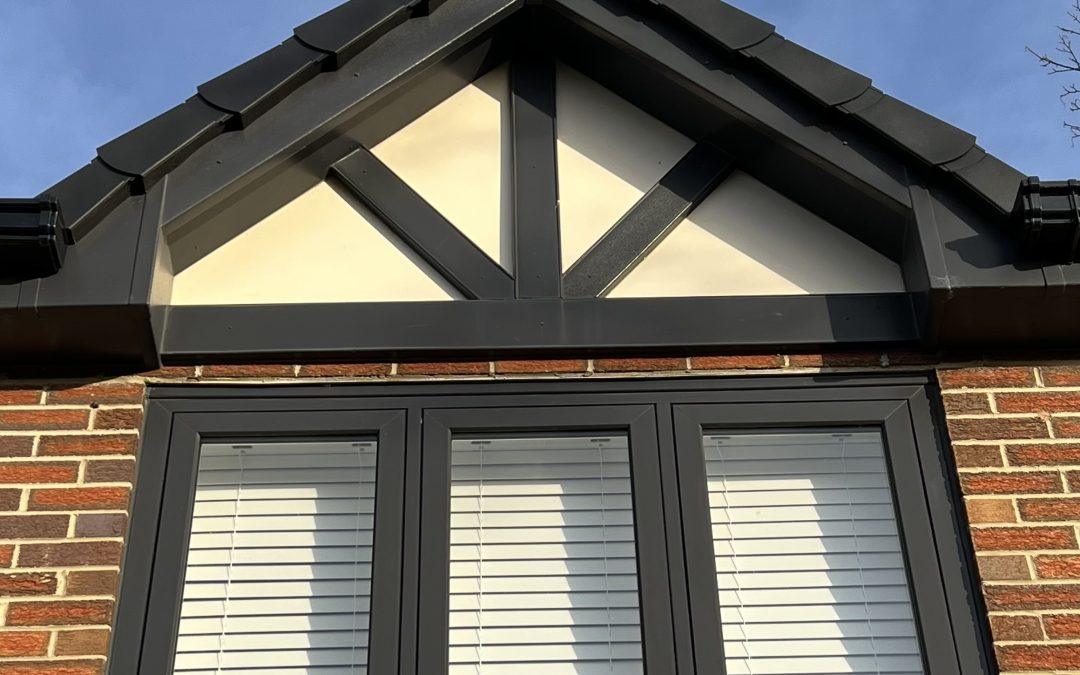
Knowing when to replace fascias and soffits comes down to a handful of clear warning signs: visible rot or sagging on timber boards, peeling paint that keeps coming back, water marks on the wall below, gaps where pests can get in, or guttering that has started to come away from the roofline. If you are seeing two or three of these on the same property, the roofline is usually past sensible repair and into replacement territory.
Roofline is one of those parts of the house that goes unnoticed for years, then announces itself all at once. Getting it right protects everything underneath, the roof structure, the insulation, the upper walls, and the inside of the property, which is why it pays to look at the whole roofline together rather than patching individual problems as they appear.
What the roofline does
The roofline is the visible edge of your roof: fascias, soffits, bargeboards, dry verge units, and the guttering that runs along them. Each part has a job.
Fascias are the boards fixed to the rafter ends, running horizontally along the roof edge. They support the guttering and seal the roof from below. Soffits sit underneath the fascias, closing off the underside of the roof overhang and ventilating the loft space. Guttering carries water from the roof to the drains. Dry verge units cap the gable ends, sealing the tiles against wind and rain.
When any one of these fails, water gets where it should not be. Once water is in, the damage spreads quickly.
Lifespan by material
Timber fascias and soffits, the original material on most older homes in Newcastle and Northumberland, typically last 15 to 25 years before rot becomes a serious issue. They need repainting every few years to keep moisture out, and once rot starts, it usually spreads faster than redecoration can keep up with.
uPVC fascias and soffits last 25 to 30 years and need almost no maintenance beyond an occasional wash. This is what most homeowners replace failing timber roofline with, and it is what we install across the North East.
How do I know if my guttering needs replacing?
Five warning signs are worth watching for.
Sagging or visibly sloping sections suggest the brackets are giving way or the guttering itself has lost its shape. Cracks or splits along the length of the gutter let water leak directly down the wall, which you can usually see as staining on the brickwork below.
Standing water inside the gutter when it has not rained for a day or two means the fall is wrong, the gutter has shifted, or it is partially blocked. Persistent overflow during heavy rain often points to undersized guttering for the roof area, which is a separate fix.
Joints separating between sections are a clear sign the seals have gone, and at that age the rest of the run is usually due as well.
If you are seeing two or more of these together, replacement makes more sense than repair. Patching old guttering rarely lasts.
Do you need to replace fascias and soffits at the same time?
In most cases, yes. The two work as a pair, and replacing one without the other usually creates a mismatched look and leaves the older component to fail not long after. The exception is when one component is genuinely sound and the other has failed early due to a specific problem, such as a leaking gutter that has rotted only the fascia behind it. In those cases, targeted replacement can work.
When you are replacing the roofline, it almost always makes sense to replace the guttering at the same time. The brackets attach to the new fascias, and the access cost of working at roof level is largely the same whether you are doing one part or all of them.
Dry verge explained
Dry verge is the modern alternative to mortar bedding on the gable ends of a roof. The original method uses cement mortar to seal the tiles to the gable, which looks fine when new but cracks over time as the building moves, letting water and pests in. Dry verge units are interlocking caps that fit over the tile ends mechanically, providing a permanent seal that does not crack.
Replacing failed mortar with dry verge during a roofline upgrade is straightforward and often a sensible call. Our roofline service covers dry verge as part of a full replacement.
When to bundle the job
Roofline replacement is one of those jobs where bundling saves money and looks better afterwards. Doing fascias, soffits, guttering and dry verge together means one access setup, one matched specification across the property, and one project rather than several.
Homeowners often combine roofline replacement with other exterior work, such as new windows or a conservatory roof replacement, which makes practical sense because the access and disruption are similar.
What we look at when we visit
When our team visits to assess your roofline, we look at the condition of the fascias and soffits along the full perimeter, the state of the guttering and how it is fixed, the gable ends and whether dry verge is appropriate, and any signs of water damage already affecting the wall or roof behind. We also discuss the colour and profile that will suit your property.
Where roofline work is part of a wider exterior project, the visit covers everything in one go. Karl Hillard had a pitched roof fitted in place of a flat roof alongside a new bay window:
‘We had our front bay window made and fitted by Hawthorns a few years ago, we also had a pitched roof fitted instead of the flat roof and the whole process was brilliant from start to finish, everything went so well from the first survey to completion.’
When timing matters
Roofline is one of those jobs that is much easier to do before water has started reaching parts of the house it should not be in. If you are starting to see staining on the upper walls, water damage in the loft, or birds nesting where soffits have come loose, the work has moved from sensible maintenance to urgent repair.
Roofline replacement can be carried out at any time of the year but it makes sense to tackle roofline replacement, before winter weather puts further stress on a system that is already failing. Our blog on why now is the time to replace your roofline before winter covers the seasonal angle in more depth. Hawthorns Windows has been installing roofline products across Newcastle and Northumberland since 1989.
To discuss the condition of your roofline, arrange a free roofline survey with our team and we will give you a clear assessment of what is worth doing and when.