
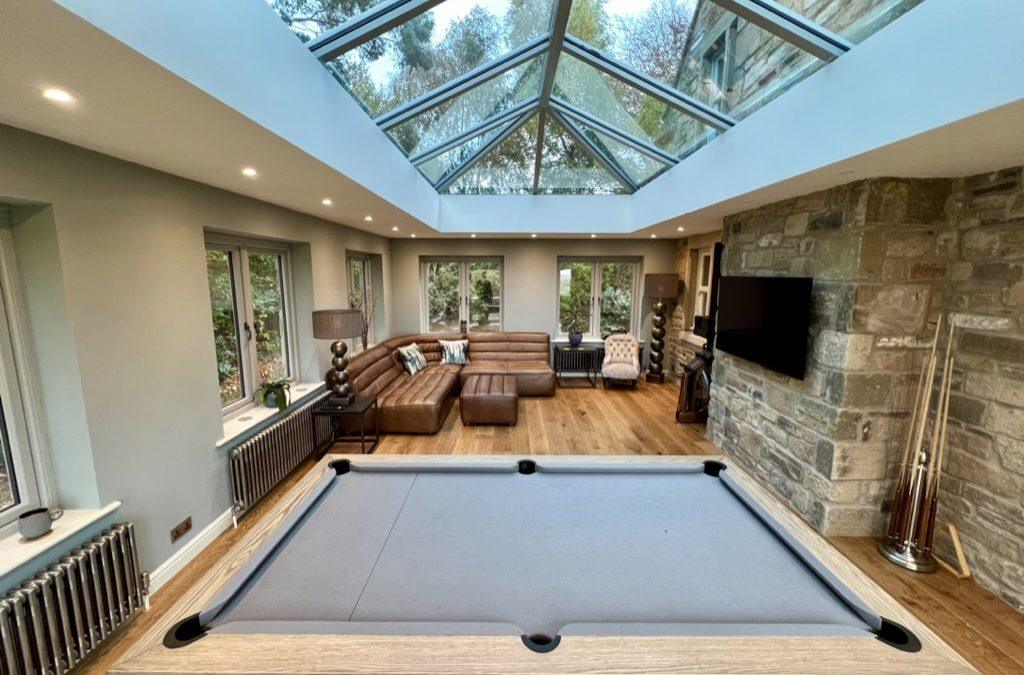
You have decided you want an orangery. The conservatory vs orangery debate is settled, and you know you want that solid, room-like feel with the roof lantern flooding the space with natural light. The question now is what yours should actually look like, how you will use it, and whether the design you have in mind will work on your type of property.
Good orangery ideas start with how you live, not how the structure looks from the outside. The best orangeries we have designed and built across Newcastle and Northumberland over the past 35 years have one thing in common: they were planned around the homeowner’s daily routine, then designed to complement the house. A kitchen extension that catches morning light. A dining space that opens onto the garden for summer entertaining. A living room that finally gives the family enough space to spread out.
Here are the orangery designs, styles and use cases that work best for North East homes, with practical advice on what to consider before you commit.
The Orangery Kitchen Extension
Kitchen extensions account for a number of orangery projects we design, and the reasons are practical. An orangery gives you something a standard extension struggles to match: a bright, open cooking and dining space that still feels like a proper room rather than a glass box.
The structural advantage is the solid perimeter roof. It provides a flat ceiling around the edges of the room where you can mount extraction units, install downlighters and run electrical feeds for appliances, all things that are awkward or impossible with a fully glazed conservatory roof. The central roof lantern then floods the working area with natural overhead light.
For terraced properties across Jesmond and Heaton, where rear garden depth is limited, a well-proportioned orangery kitchen extension can transform a narrow galley kitchen into an open-plan family space without eating up too much of the garden.
The key is getting the proportions right. An orangery that is too shallow feels cramped; one that is too deep blocks light to the rooms behind it.
If you are replacing an existing conservatory that has become unusable, an orangery kitchen is often the most practical upgrade. It turns wasted space into the room you actually use most. For homeowners dealing with a conservatory that is too cold in winter, the improved thermal performance of an orangery roof alone can make the difference.
A Living Room With a View
Not every orangery needs to be a kitchen. Some of the most enjoyable spaces we build are orangery living rooms, designed as a quieter retreat from the main house that still feels connected to the garden.
This works particularly well on properties where the existing living room is north-facing or small. Adding an orangery to the rear or side of the house creates a second living space with better light, more volume and a direct connection to the outdoors through French doors or bi-folds.
The design details make the difference. Underfloor heating keeps the space comfortable year-round without visible radiators. Stone or porcelain floor tiles absorb warmth during the day and release it in the evening, reducing heating costs. Ceiling-mounted speakers and concealed lighting create atmosphere without cluttering the room.
For stone-built homes in Morpeth or Hexham, a traditional orangery design with stone pillars and a atrium roof suits the architecture far better than a modern glass extension. The orangery feels like it has always been part of the house.
Modern Orangery Designs
Modern orangery styles have moved well beyond the classical columns and period detailing that defined the traditional form. Contemporary designs use slimmer frame profiles, larger glazed panels and cleaner rooflines to create spaces that suit newer properties or recently renovated older homes.
The shift towards minimal framing means more glass and more light. Generous glazing on two or three sides, paired with a flat perimeter roof and a discreet roof lantern, gives a modern orangery a distinctly different character from a traditional one. Where a more contemporary feel is needed, elements like aluminium bi-fold or sliding patio doors can be incorporated into the design to create a sleek garden-facing opening, while the main structure retains the solid walls and insulated roof that make an orangery comfortable year round.
Colour plays a role too. Anthracite grey frames have become the default for modern orangeries, matching the trend across windows and doors. Paired with a slim-profile roof lantern, the effect is sleek and contemporary without feeling cold.
The structural benefit remains the same regardless of style. That solid perimeter roof means better insulation, lower energy costs, and a room that stays comfortable in both January and July.
Traditional Orangery Styles for Period Homes
For Victorian, Edwardian and Georgian properties, a traditional orangery design often works best. These incorporate brick or stone pillars that match the existing house, decorative corbels, and a more substantial roof structure that feels proportionate to the building.
The appeal is permanence. A traditional orangery looks and feels like part of the original house rather than an addition. On older properties in Northumberland, especially those in conservation areas, this approach is often a requirement rather than a choice. Planning officers want to see designs that are sympathetic to the existing architecture, and a well designed traditional orangery meets that brief naturally.
If you are unsure whether your property falls within a conservation area or whether you need planning permission, it is worth checking with your local authority early. Most orangeries fall within permitted development rights, meaning no formal planning application is needed, but there are exceptions for listed buildings, conservation areas and larger structures.
The Planning Portal has detailed guidance on permitted development limits for extensions.
Roof Lanterns and Glazing Options
The roof is what defines an orangery. A flat perimeter ceiling with one or more glazed roof lanterns creates the signature look and controls how light enters the room.
A single central roof lantern suits most standard-sized orangeries, typically up to around 4 metres wide. For larger spaces, twin roof lanterns provide more even light distribution across the full width of the room and add a sense of symmetry and visual balance.
Glazing specification matters more than most homeowners realise. Our orangery roofs are fitted with Ambience roof glass as standard, which provides self-cleaning properties, better sound insulation and temperature regulation. That last point is critical. The right roof glass keeps the room cooler in summer and warmer in winter without relying entirely on blinds or heating.
Roof lantern style should match the overall design. Traditional orangeries suit a more ornate lantern with visible glazing bars. Modern designs look best with a flat or near-frameless lantern that sits flush with the roofline.
Orangery Ideas for Smaller Properties
You do not need a large, detached house to benefit from an orangery. Some of the most effective designs we can be built on 1930s semis in Gosforth and smaller terraced properties across Newcastle, where rear space is tight and every square metre counts.
The key is proportion. A narrow, well-designed orangery that extends three to four metres from the back wall can add a meaningful dining or living space without dominating the garden. Side-return orangeries, built into the gap between your house and the boundary wall, are another option that works well on terraced and semi-detached properties.
Bi-fold or sliding doors on the garden-facing wall make a smaller orangery feel much larger when open in summer. When closed, the solid roof structure means the room stays warm and usable through winter without the temperature swings you get with a conservatory.
Making the Space Work Year-Round
The biggest concern homeowners raise about any glazed extension is temperature. Too hot in summer, too cold in winter, unusable for half the year. A properly designed orangery solves this.
The solid perimeter roof provides insulation that a fully glazed conservatory roof cannot match. Combined with high-performance glazing in the roof lantern and walls, a modern orangery maintains a stable temperature throughout the year. The difference between a bespoke orangery built with proper insulation and a budget conservatory conversion is significant enough to feel immediately.
Heating options include underfloor systems, radiators tied into the existing central heating, or standalone electric solutions. For homeowners comparing options, a warm roof sunroom offers a similar year-round living space with a fully solid roof, which may suit properties where a roof lantern is not practical.
Your Orangery, Designed Around Your Home
The best orangery ideas come from understanding your home, your routine and the space you have to work with. Whether you want an open-plan kitchen flooded with light, a calm living room with garden views, or a flexible family space that works in every season, the design should start with how you will use the room.
Every orangery we build at Hawthorns is bespoke, designed to complement your property and tailored to how you live. If you are ready to explore what an orangery could look like on your home, book a free design consultation and we will visit your property, discuss your ideas and show you what is possible.
Or browse our gallery of completed orangery projects across Newcastle and Northumberland to see what we have designed for homeowners like you.