
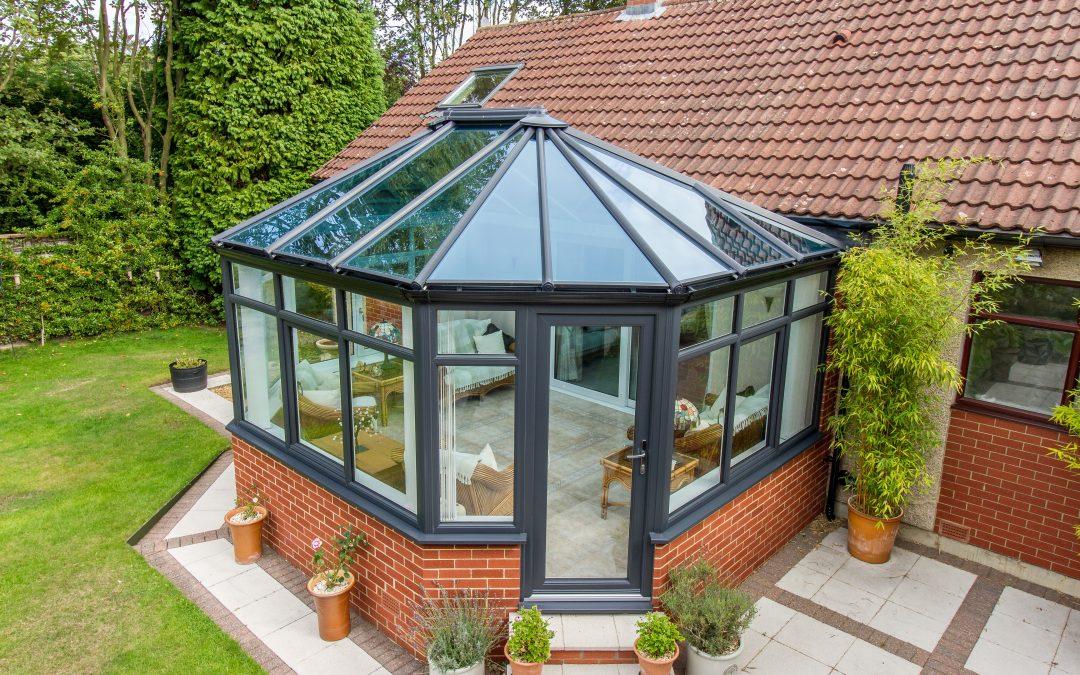
Your conservatory choice comes down to two design directions. Do you want clean, contemporary lines with minimalist frames and expansive glass panels? Or would you prefer Victorian elegance with a traditional pitched roof?
What matters most is how the style works with your property’s existing architecture and your personal aesthetic. Modern lean-to conservatories can look superb on period terraces when executed thoughtfully. Equally, traditional Edwardian designs often enhance contemporary homes beautifully.
What Defines Each Style
Modern conservatories prioritise simplicity and light. Roofs tend to be flat or subtly pitched, often incorporating solid insulated panels for year-round comfort. The aesthetic is geometric and uncluttered – no decorative flourishes, just clean architectural lines that blend seamlessly with contemporary homes.
Lean-to conservatories epitomise this approach. The simple rectangular footprint and single-slope roof create a streamlined profile that suits modern properties and tight spaces. Large glass panels flood the interior with light whilst maintaining that minimalist edge.
Traditional conservatories draw inspiration from Victorian and Edwardian glasshouses. Ornate ridge cresting, decorative finials, and bay-fronted designs create visual interest and period charm. Pitched roofs with intricate glazing bars echo the craftsmanship of historic architecture.
Victorian conservatories feature multi-faceted bay fronts and steeply pitched roofs. Edwardian designs offer a squarer footprint that maximises floor space whilst maintaining that classic elegance. Both styles work beautifully when the ornate detailing complements your property’s existing character.
Matching Style to Your Property
For Victorian and Edwardian properties, particularly common across the North East traditional conservatories often feel like natural extensions. The pitched roof and decorative elements echo the home’s existing architecture, creating visual harmony.
But modern conservatories can work too. A smooth lean-to in anthracite grey adds contemporary contrast whilst respecting the building’s proportions.
For contemporary homes and new builds, modern conservatories typically suit best. The clean lines and minimalist frames mirror the property’s architectural language. Floor-to-ceiling glass and flat roofs create that indoor-outdoor flow modern homeowners value. Traditional styles aren’t ruled out, though. An Edwardian conservatory with understated detailing can add character to a modern property without feeling incongruous. It’s about scale and restraint, grand Victorian ornamentation overwhelms contemporary homes, but subtle traditional proportions can work.
For bungalows and mid-century properties, either approach works depending on your vision. Modern lean-to conservatories maximise light in compact footprints. Traditional gable designs add height and presence. The deciding factor is often how you plan to use the space and what aesthetic feels right to you.
Replacing an Existing Conservatory?
If you’re considering replacing an old conservatory, the modern vs traditional choice still applies, and refurbishment offers the perfect opportunity to shift styles.
Many North East homeowners use roof replacement to completely transform their conservatory’s aesthetic. A dated polycarbonate-roof traditional design can become a smooth, contemporary space with a warm roof system. Conversely, a plain 1990s lean-to gains period charm when you add ornate detailing and a pitched glass roof.
The advantage: you’re not locked into your original style choice. The existing base structure can often support either modern or traditional roofing, giving you genuine flexibility to choose what suits your property today rather than what was fashionable 20 years ago.
Design Characteristics That Matter
Modern conservatories deliver:
- Frames that maximise glass area
- Clean geometric lines with no decorative elements
- Flat or low-pitch roofs, often with solid insulated sections
- Contemporary door options (bi-folds, sliding panels)
- Minimalist hardware and fittings
The effect is light, open, and uncluttered. Modern conservatories suit homeowners who value simplicity and want their extension to feel like a contemporary living space rather than a traditional garden room.
Traditional conservatories offer:
- Ornate ridge cresting and decorative finials
- Multi-faceted bay fronts or gable ends
- Steeply pitched roofs with glazing bars
- Period-appropriate hardware (traditional handles, hinges)
- Intricate detailing that adds architectural interest
The result is character and elegance. Traditional conservatories appeal to homeowners who appreciate classic design and want their extension to enhance their property’s period features.
Performance Considerations
Both styles can achieve excellent year-round comfort, it’s the construction details that matter, not whether you choose modern or traditional aesthetics.
Modern conservatories often incorporate solid insulated roof panels as standard, creating warm, usable spaces even in colder months. The minimalist design naturally lends itself to contemporary performance glazing and climate control systems.
Traditional conservatories have evolved significantly. Modern materials and engineering mean you can have Victorian ornate detailing with contemporary thermal performance. Insulated roof systems, high-performance glazing, and proper heating transform traditional designs into comfortable year-round rooms.
The myth that traditional conservatories are cold, unusable spaces stems from outdated construction methods. Today’s traditional conservatories use the same performance materials as modern designs, you’re choosing aesthetics, not sacrificing comfort.
Making Your Decision
Consider three factors: your property’s existing style, how you’ll use the space, and your personal aesthetic preference.
If your property has strong architectural character, traditional conservatories often feel more harmonious. The ornate detailing respects the building’s heritage.
If you’re working with a contemporary property or have recently renovated in a modern style, lean-to or minimalist conservatories typically integrate better. The clean lines complement rather than clash.
If your property sits somewhere in between you have genuine choice. This is where personal preference matters most. Do you gravitate towards classic elegance or contemporary simplicity?
Think about how you’ll use the conservatory too. Formal dining rooms often suit traditional Edwardian proportions. Relaxed living spaces and home offices work beautifully in modern lean-to designs. Neither is exclusively suited to one use, but there’s a natural affinity.
How Hawthorns Approaches the Choice
Hawthorns Windows has been installing conservatories for over 35 years across Newcastle, Northumberland, and the wider North East. We understand that choosing between modern and traditional styles feels like a big decision – that’s why our approach focuses on helping you visualise what works for your specific property.
If you’re considering a conservatory for your property, our team can guide you through the options. For contemporary alternatives, explore our warm roof sunrooms which offer modern aesthetics with superior insulation. Or discover orangeries, the elegant middle ground between traditional conservatory charm and modern extension solidity.