
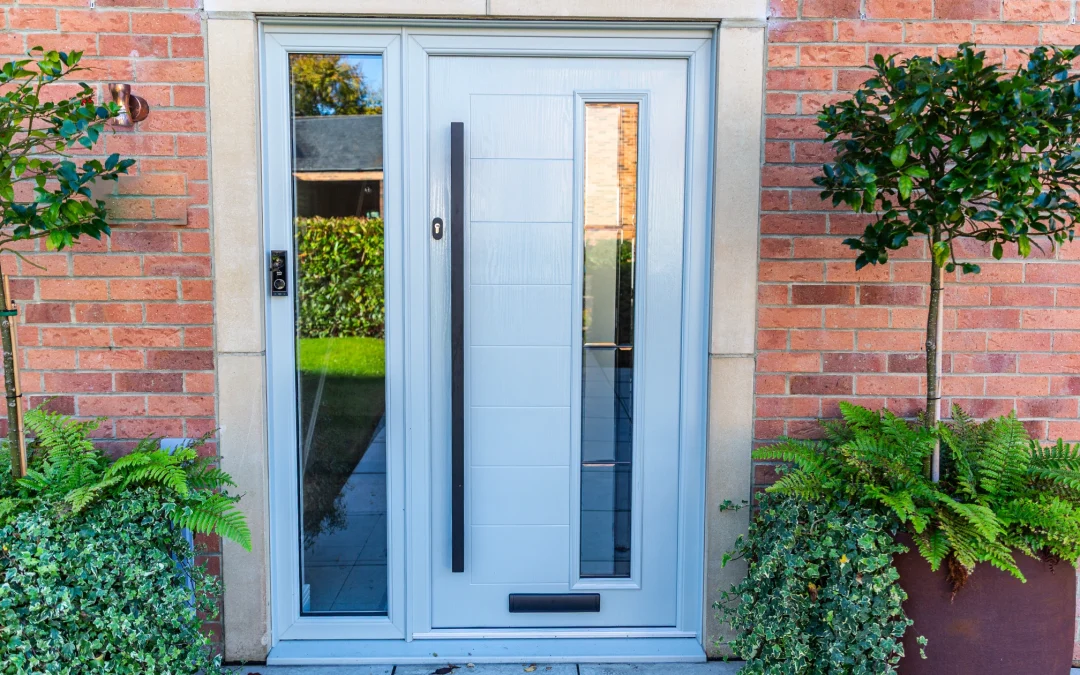
A composite front door is one of the most popular home improvements in the UK right now, and for good reason. It combines the look and weight of a solid timber door with the low maintenance and weather resistance of modern engineered materials.
But not all composite doors are built to the same standard, and the differences become clear over time rather than on day one. Here is what to check before you commit, based on what we have learned fitting composite doors across Newcastle, Northumberland and the wider North East over the past 35 years.
What a Composite Door Is Actually Made Of
A composite door is built from multiple layers rather than a single material. The outer skin is typically GRP (glass-reinforced plastic), which gives the door its colour and woodgrain texture.
Behind that sits a solid insulating core, usually polyurethane foam or engineered timber, which provides thermal performance and structural strength. The inner face is usually a smooth or lightly textured panel, and the whole assembly is mounted in a reinforced frame with integrated weather seals.
That layered construction is what makes composite doors perform so well. The solid core holds heat in and keeps draughts out. The GRP skin resists fading, scratching and weathering. And because the door is engineered rather than grown, it does not swell, warp or rot the way natural timber can over time.
The Core Makes the Difference
The single most important part of a composite door is the core, and it is the part you cannot see.
A solid polyurethane foam core provides the best insulation and makes the door feel heavy and substantial in the hand. This is what you should expect from a quality composite door. Some lower-specification doors use a honeycomb or partially hollow core to reduce manufacturing costs. These doors are lighter, less insulating and less soundproof. They still look the same from the outside, which is why it is worth asking the question before you buy.
A quality composite door should achieve an energy rating of A or above. If the supplier cannot tell you the energy rating, that is worth noting.
Locking Systems and Security
The door itself is only half the security equation. The locking system matters just as much. Multi-point locks are the current standard on quality composite doors. They distribute force across the full height of the door rather than relying on a single latch point. That makes forced entry significantly harder.
At Hawthorns, security comes as standard. Every composite entrance door we install is equipped with a high-performance Yale multi-point locking system for maximum protection and reliability. Our doors are built to meet PAS 24 security standards and accredited by Secured by Design. That means trusted, police-backed protection against modern burglary methods. That applies regardless of style, colour or glazing option, so security is consistent across the full range.
Colour, Finish and How They Age
One of the advantages of a composite door is the range of colours and finishes available. Anthracite grey, sage green, navy, oak woodgrain, black and white are all popular choices. The colour is consistent through the GRP skin rather than being a surface coating that can peel.
On a quality door, the woodgrain texture will still look convincing five or ten years in. On a lower specification door, the surface can start to look flat and the colour can shift after a few years of UV exposure.
The finish will not need painting, staining or varnishing at any point. A wipe down with warm soapy water a couple of times a year is all that is needed to keep a composite door looking fresh.
If a supplier suggests that a composite door will need repainting over its lifespan, that is a sign the GRP skin is not thick enough.
The Frame and Installation
A composite door is only as good as the frame it sits in and the quality of the fit. A well-engineered frame with proper weather seals and a low-profile threshold keeps draughts out and maintains the door’s thermal performance over its full lifespan.
A poorly fitted frame creates gaps that cause draughts, sticking and security weaknesses. That applies regardless of how good the door itself is.
Look for an installer who surveys, fits and provides aftercare in-house rather than subcontracting. That single point of responsibility means any issues are resolved quickly and the person who fitted your door is the same person who stands behind it.
If you would like to see the full range of composite door styles, colours and glass options we offer, visit our showroom in Newcastle or Morpeth.
Or get in touch and we will arrange a free consultation at your home.